
Supporting Your Dog’s Joints From the Ground Up
The stiffness before they stand. The pause at the bottom of the stairs. The look back at you before a jump that used to take no thought.
Do not dismiss what you’re noticing. Lean into it and give it the attention it deserves. Write it down or record short video clips to review yourself or share with your vet.
Joint pain in dogs has a clear conventional playbook: glucosamine supplements, anti-inflammatory medication when it progresses, and newer options your vet may raise, like Librela, a once-monthly injection that calms the nerve signaling behind the pain rather than the inflammation around the joint. Adequan injections can be part of the picture too, although they are a painful intramuscular injection. But if you have been doing the standard things and your dog is still struggling, there are other options for supporting your dog. The playbook stops at the joint itself, and joint pain rarely starts there.
Inflammation is a whole-body conversation that includes the gut, the liver, the nervous and immune systems. A dog with chronic joint pain is not just a dog with worn-down cartilage. They are a dog whose internal terrain is tilted toward inflammation, and the joints are simply where that inflammation becomes visible. When you support the whole terrain, the joints get relief a prescription alone cannot provide.
Want the short version first? → Joint Support Plan for Your Dog, a free PDF you can fill in and take to your vet. It is a generalized joint plan and a summary of this article. Print it off so you can have it in front of you as you read through the article.
UC-II collagen · Omega-3 · Boswellia · Hydrolyzed collagen · Turmeric · Astaxanthin · Glucosamine
SAM-e · Hyaluronic acid · MSM
What I do not recommend: green-lipped mussel · plasma
All the doses in one place · The omega-3 chart · The collagen chart · What better looks like
Tier 1: Start here, today. These cost little or nothing.
Reduce excess weight. This is the least glamorous item on this page and the one with the most behind it. Every extra pound presses on the joint with every single step, and a lean dog with arthritis moves better than a heavy dog with the same joints. If your dog is carrying extra, you do not need a crash plan. You need a slightly smaller bowl, treats counted into the daily total instead of added on top, and a body condition check with your vet so you are working from a real number rather than a guess. This costs nothing and it outperforms most of what you can buy.
Filter the water. If your dog drinks tap water, their body is processing chlorine, fluoride, and whatever else your municipality adds or fails to remove. A basic carbon filter or pour-through pitcher costs less than a month of glucosamine chews. Reverse osmosis is ideal. Start where you are.
Look at the food. Highly processed kibble generates more metabolic waste for the liver and kidneys to process. Even the premium brands. You do not need to switch their entire diet tomorrow (but you can). Adding a spoonful of plain canned pumpkin or cottage cheese, boiled chicken or a sardine packed in water, bone broth to hydrate kibble, a splash of kefir, an egg or some gently steamed broccoli changes the nutritional profile without overwhelming you or your dog’s digestion.
Keep them moving, at their own pace. Movement keeps synovial fluid circulating, but only the right kind of movement for where they are right now. When long walks are too much, take several shorter ones. When stairs hurt or become unsafe, use a ramp, or support them by lifting or guiding them. Area rugs, yoga mats, or carpet runners make hard flooring safer. A dog who slips because they are stiff and unsteady tenses every muscle, and that tension is felt throughout the whole body. Respect your dog’s physical limitations, and modify their exercise and environment to optimize their daily joys in life.
Tier 2: What to add, strongest first
These are listed in the order I would add them. Every dose is in one table further down, so you can read this part without doing the math and go get the numbers when you are ready.
Add one at a time. A week at minimum between supplements, and introduce a new food several times over three to five days. That is long enough to catch an intolerance, and to walk back one change without dismantling the plan. A change is not only a new supplement. The dose, the timing and how many times a day you give something all count, because any of them can be the thing your dog reacts to.
I use human-grade supplements for my dogs whenever it is appropriate: better oversight and labeling, real quality standards and third-party testing, and it is often the only way to reach a therapeutic level, which is a conversation to have with your vet. Check the additives every time: never xylitol or artificial sweeteners.
UC-II collagen: teaching the immune system to stand down
Most joint supplements work by supplying building blocks. Glucosamine, chondroitin, and hydrolyzed collagen give the body raw materials for cartilage repair. UC-II (undenatured collagen, type II) works on an entirely different mechanism, and if you misunderstand how to give it, you are not alone.
Type II collagen is the main structural protein in joint cartilage. When a joint degenerates, fragments of that collagen leak into the bloodstream. In some dogs, the immune system sees those fragments and begins treating them as foreign, mounting a low-grade autoimmune response against the cartilage itself. The joint is not just wearing down. It is being attacked from the inside.
UC-II works through a process called oral tolerance. You introduce small amounts of the same collagen through the gut, where the immune system’s default posture is tolerance rather than attack. Specialized immune cells in the intestinal lining sample the collagen, present it to the rest of the immune system, and essentially say: this is self. Stand down. Over weeks, the immune response against the joints dials back.
Two things carry the effect. First, it has to be the undenatured form, meaning the raw, uncooked collagen with its natural shape intact. Heating or heavily processing collagen changes that shape, and once the shape is lost it stops working as an immune signal. That is why this is not the same as gelatin, or the collagen powder you stir into food. Those are broken-down building blocks. UC-II is a tiny, intact signal, and the signal depends on that shape staying whole.
Second, give the small dose consistently. This kind of immune training works in a narrow window, where a small amount teaches the body tolerance but a larger amount can do the opposite. More is not better here. Give it on an empty stomach, or at bedtime. Not with a meal. A meal floods the gut with dietary collagen and protein while those cells are sampling, and the signal is lost in the noise. A lick of something to get it down is fine, and so is half a pill pocket carrying no glucosamine, no chondroitin and no other collagen. A carrier is not a meal. Pick a time you can keep up. Daily dosing is important.
Buying it without getting fooled. The 40 mg on the label is 40 mg of the standardized UC-II ingredient, which delivers less than 10 mg of actual active undenatured collagen. Same dose, two numbers. Look for the UC-II trademark together with the words “undenatured type II collagen,” and a serving of either 40 mg UC-II or 10 mg undenatured type II collagen. Walk past anything that only says “collagen,” “collagen peptides,” or “hydrolyzed.” That is denatured collagen, fine as protein, useless for immune tolerance. I went looking and could not find a clean dog-specific product I trusted to actually hit the dose without adding competing ingredients, so a plain UC-II capsule made for people, given the same way, is often the practical choice.
You can give with a teaspoon of plain yogurt, a smear of butter, half a pill pocket or tiny bit of wet food. Truly minimal. Not a dense supplemental chew loaded with an array of other joint support ingredients. Expect shifts over weeks rather than days, and look for gradual improvement in stiffness, in willingness to move, and in ease in rising.
Omega-3: lowering inflammation body-wide
Omega-3 fatty acids are one of the most impactful things you can build this layer on, and one of the least controversial. For osteoarthritis (OA) specifically, EPA is the fraction that does the real work on inflammation, so choose a source that delivers it.
Smaller fish like anchovy and sardine are my preference. They sit low on the food chain, so they carry fewer accumulated contaminants and microplastics than the larger fish or green lipped mussels, and they lean EPA rather than DHA. For everyday preventive support, that lower toxic load is exactly what I reach for.
Algal oil is the cleanest option and the only source here that is not from an animal source, which matters if fish is off the table. Because algal oil is DHA-dominant by nature, it is fine for general and cognitive support, but it does not get you to a therapeutic dose for arthritis: matching the desired EPA a fish oil delivers would take more total daily oil than the safe upper limit allows, at any body weight. If your dog cannot have fish and you need therapeutic levels, that is a conversation with your vet rather than a larger dose.
Krill comes up often. It carries relatively little EPA and DHA per serving and costs more per milligram, so a 50 lb dog would need somewhere around 17,000 mg of krill oil a day. That is about twice the volume of a standard fish oil, and a meaningful share of the daily calories for a dog that size.
Dose by EPA and DHA, then by the capsule. The number that matters is not the size of the softgel, it is the EPA and DHA inside it. A 1000 mg fish oil capsule usually delivers only about 300 mg of the two combined. If a label gives you only total oil, divide by about three as a quick guide.
Consider your dog’s medications. There is a ceiling here on omega-3 dosing and going past it can be dangerous. If your dog takes an anti-inflammatory like carprofen, bring this to your vet before moving into the therapeutic range. At high doses, omega-3 plus NSAIDs can thin the blood and irritate the gut. Stop high-dose omega-3s a week or two before any planned surgery for the same reason. Sensible monitoring looks like a blood panel before you start, a recheck two to four weeks after you reach the target dose, then every three to six months. Stop and call the vet for black or tarry stools, unusual bleeding or bruising, pale gums, or sudden stomach upset. None of this is a reason to avoid omega-3. It is the reason to work with your vet rather than around them.
Store all treats and supplements containing fish oil in the fridge, the way you would milk. Omega oils of every kind degrade at room temperature, and a rancid oil works against the thing you bought it for. And do not count on a bag labeled joint diet to deliver a therapeutic dose. Months in storage and an open bag at home oxidize these fats, and the milligrams printed on the bag are rarely what is left by feeding time. Treat omega-3 from food as helpful background and build the real dose on something you can measure.
Reducing NSAID use is the goal. Omega-3s can lower an NSAID dose over time while supporting overall health. A dog in pain should have relief, and none of this is a reason to change a prescription on your own. But an anti-inflammatory every day for the rest of a dog’s life asks a great deal of the stomach lining, the kidneys and the liver.
The 2022 AAHA pain management guidelines cover how to use an NSAID safely: a physical exam and history before starting, screening for preexisting disease, baseline bloodwork with periodic rechecks of blood count and chemistry, and never a second NSAID or a contraindicated drug alongside. They do not set a stopping point, and they treat NSAIDs as a mainstay for arthritis pain. My own view (and that of my vet): a daily script handed across the counter without that conversation gives you a false sense that the discomfort is handled, at a cost you were never told about. Ask your vet directly: is the frequency and dose still right at this stage, what should I watch for, and what would it take to get to the lowest effective dose or to occasional use. Never reduce or stop a prescribed medication on your own.
Boswellia: working it from the inside and outside
Two of my own dogs brought me to boswellia to help manage their joint pain. Luna, after two torn CCLs, and now Lolly, who carries severe lumbar arthritis in her back end. Working through their treatment options is what pushed me to look harder at topicals. What is really nice is that I can try them myself and use that experience to shape how I care for my dogs and my own chronic pain.
If there is one herb worth knowing for an arthritic dog, it is boswellia, the resin of the frankincense tree. It calms the leukotriene side of inflammation, a pathway common pain relievers leave untouched. That is why it tends to be gentle on the stomach and liver, and why it can sometimes allow a dog to lean on lower doses of harder-hitting medication. That last part is always a conversation to have with your vet, never a swap you make on your own.
Finding it in therapeutic doses is harder than it looks. Boswellia is listed in plenty of widely available joint formulas, so it is easy to assume you are already covered. This is where I got fooled. Read the amount before you count it. In the combination product I had been using and reviewed for this article, boswellia came in at 20 to 40 mg, and the canine therapeutic levels run into the hundreds. Being on the label and being at a needed dose are different things. In my experience, a real dose means a standalone standardized extract (60-65% boswellic acids at 30% AKBA) given by weight, and filling your own capsules at home.
Your dog does not need to be showing signs of arthritis to benefit, either. Starting a lower dose of boswellia in middle age, around seven or so, is a sound way to support the joints before stiffness really sets in.
You can administer it two ways at the same time for added benefit.
Orally, it works through the bloodstream. It travels the whole body, calming inflammation system-wide and nudging the immune system toward repair. This systemic route is what does the most to slow joint damage over time, which makes oral boswellia the foundation, not the afterthought. Look for a standardized extract at 60 to 65% boswellic acids rather than plain resin powder, because a weaker standardization at the same milligrams delivers proportionally less. Boswellia is fat-soluble, so it absorbs better given with food. Expect to see something at two to three weeks and judge it properly at four to six.
On taking breaks/cycling: this practice appears not to apply to boswellia. The human osteoarthritis trials ran boswellia continuously for thirty to a hundred and eighty days, with no serious adverse events and clean bloodwork at ninety days, and the standard herbal references list no warnings for it at all.
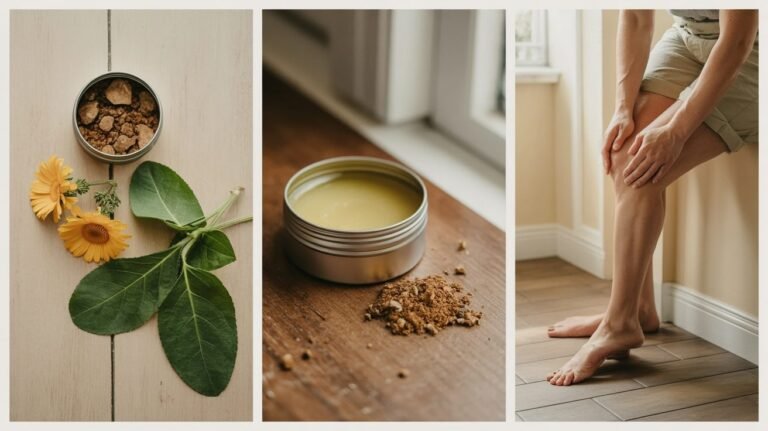
Topically, it works locally. Boswellic acids are fat-loving, so in an oily salve they sink into the skin and concentrate right where you apply them, at levels the bloodstream route alone cannot reach in that area. Because it is processed differently through the skin, a topical can go on top of the oral dose for a flared hip or elbow without stacking the systemic load. The oral dose sets the foundation. The salve is a targeted comfort boost where it hurts most.
Pro tip: to remove oil after an absorption period, use green tea or diluted apple cider vinegar to wash the area. I usually wash away residue before a new application to avoid sticky buildup. This is a care ritual in itself.
One ground rule before any topical. We all know dogs lick. A topical applied to a joint is a topical that may end up in your dog’s mouth, and that means every ingredient needs to be lick-safe. This rules out some popular choices. Arnica is highly toxic if ingested. It also means checking with your vet if your dog is on ongoing medication, since CBD, St. John’s Wort, boswellia, piperine, and turmeric-based preparations can all interact with drugs your dog is already taking.
With topicals specifically, I try everything on myself before it goes on my dogs. Not because I distrust the research, but because they cannot tell me what they feel in any detail. That firsthand experience helps me to make better informed decisions in my dogs’ care and quality of life.
Ready to make it at home? → Aging Gracefully Arthritis Salve, printable recipe card
Want the longer explanation of why both routes work? → Home Remedies for Aches & Pains: How Boswellia Actually Works
Hydrolyzed Collagen: the other collagen
This is where it gets confusing, so let me be precise. There are two types of collagen supplements and they are not versions of the same thing. They work by different mechanisms, they are dosed a hundred times apart, and one is not a substitute for the other.
UC-II, discussed above, is a tiny intact signal that teaches the immune system to stand down. It must stay undenatured to work.
Hydrolyzed collagen peptides are the opposite by design. They are deliberately broken down so they can be absorbed, circulate, and signal the cells that build cartilage to get to work, while turning down some of the inflammatory signaling around the joint. Where UC-II calms an attack, this one supplies rebuilding instructions.
The two layer rather than substitute. If you are choosing one to start with, the honest answer is in the sources block at the bottom of this page, where the evidence behind each one is laid out plainly.
If you already have collagen peptides for yourself, that is the lowest-friction place to start. Human-grade peptides are the same ingredient, usually bovine rather than porcine, which does not change how they work.
What supports the building of collagen. Supplying the raw material is only half the battle. Vitamin C has the clearest role of the three, because without it the body cannot form stable collagen at all. Manganese and copper are the other two usually named, both working in the assembly and cross-linking of the fibers. For most dogs this comes from food rather than a bottle. The Herbal Dog‘s own arthritis list reaches for vitamin C, silica, MSM and trace minerals rather than for isolated single nutrients.
Turmeric, and the form problem
The turmeric in most joint supplements is the same thing that sits in your spice jar. Curcumin is the active compound, and plain curcumin barely absorbs in any species. Less than one percent of what is ingested reaches the bloodstream, and what gets in is cleared in under an hour.
| Form | What it is | Absorption vs plain curcumin |
|---|---|---|
| Turmeric or plain curcumin | The culinary spice. What most dog products contain | Under 1% absorbed |
| With piperine | Black pepper extract that slows the liver’s clearing of it. Interacts with a number of meds. | ~20x |
| Phospholipid complex (Meriva) | Curcumin bonded to a phospholipid molecule | ~29x |
| Micronized or colloidal (Theracurmin) | Ground fine enough to dissolve | up to ~40x |
| BCM-95 | Curcuminoids kept with turmeric’s own oils | ~7x |
| Liposomal or cyclodextrin | Curcumin carried inside a vesicle or a sugar cage | ~2 to 2.7x |
Potency claims are not form claims. “Thirty times stronger than turmeric” describes concentration, not absorption, and a product can be accurate about every number it prints and still be selling you the poorly absorbed spice.
How to actually source it. Read the ingredient line for one of those delivery forms by name. Meriva or another phospholipid complex, Theracurmin or another micronized form, BCM-95, a liposomal carrier, or curcumin paired with piperine. If none of those words appear anywhere on the label, you are looking at the spice, whatever the front of the package says. Because supplements for pets are not regulated as drugs, also look for the NASC Quality Seal from the National Animal Supplement Council, which means the manufacturing has been third-party audited, the label has been checked against what is in the bottle, and adverse events get reported.
The dose, once the form is right. Around 15 to 20 mg per kilogram of body weight a day. Start at a quarter of that and give it with a meal that has some fat in it. These figures come from veterinary and industry sources rather than canine dosing trials, so take them to your vet as a starting point.
Before giving your dog turmeric, have your vet check gallbladder and liver function. Gallbladder problems in dogs are becoming more, and more, common. There is real risk here due to curcumin stimulating bile flow, and it is contraindicated in dogs with gallbladder mucocele, bile-duct obstruction or a history of gallbladder problems.
The body masks gallbladder and liver trouble for long stretches before anything is noticeable. You cannot rule it out by monitoring your dog. If your dog has always eaten a highly processed kibble diet, they likely need organ support in place before turmeric is added. If you are considering adding turmeric/curcumin to your dog’s routine, discuss it with your vet and ask them to do the bloodwork to check thier gallbladder and liver enzymes.
A few more things to be aware of before giving your dog turmeric or curcumin containing products. Curcumin thins the blood slightly, so it should be discontinued well before any surgery and needs a vet conversation first if your dog has a bleeding disorder or takes an anticoagulant.
NSAIDs, like carprofen, need to be monitored closely when taken together. The combination work well for treating pain by different means but they can compound stomach irritation as well. And it can lower blood sugar, which matters if your dog is diabetic.
It is also important to understand how piperine works. It boosts absorption by slowing the liver enzyme that clears curcumin, which interferes with several common medications at concentrated or golden-paste levels. A culinary pinch of black pepper is not the concern, but at higher levels it can be dangerous.
Astaxanthin
The red pigment in krill and salmon. The dose studied in dogs: 0.3 mg per kg a day, given with a meal.
What that dose was shown to do in dogs is lower a marker of oxidative damage and bring down triglycerides. Ten beagles over six weeks against a control group, plus five obese dogs over eight. Small studies, one author employed by the company that makes the astaxanthin, and neither one measured a joint.
Arthritic dogs have been studied, twice, and both times astaxanthin was inside a mixed formula. The better of the two was a multicentre trial of 52 dogs against placebo over ninety days. The supplemented dogs improved – and so did the placebo dogs, on most measures. One score separated them.
And those formulas contained eggshell membrane, boswellia, hyaluronic acid and krill. Two of those are already on this page with evidence of their own, so nothing in either trial tells you what the astaxanthin contributed.
In people, one small eight-week trial of astaxanthin on its own improved pain, function and two inflammatory markers in knee osteoarthritis. It is a single study in a minor journal and nobody has repeated it yet. In mice and in cartilage cells it preserves collagen and aggrecan and lowers the enzymes that cut them.
So the mechanism holds up across mammals, the antioxidant effect is real in dogs, and every time it has been put in front of an arthritic dog it has been one ingredient among five. Worth adding. Not worth crediting.
Glucosamine
Glucosamine and chondroitin are the default. They are in the treats, the kibble, the chews at the checkout counter. So it is worth pointing out what the evidence actually shows, even though it is not a neat and tidy answer. The research is mixed.
Glucosamine is sold as a raw material: your dog swallows it and the body uses it to rebuild cartilage. For that to work, enough of it has to arrive at the joint. Only a small fraction does. The one published measurement in dogs found about twelve percent of an oral dose reaching the bloodstream. Human estimates run from six to twenty-five percent and do not agree with each other. Giving more is not the answer: in the human dose-escalation work, doubling the dose did not double what was delivered to the joints.
Then there is the question of form. Glucosamine sulfate does appear to absorb better than glucosamine hydrochloride, and to stay in the joint longer. The only study that compared them head to head was done in horses, and no dog has ever been measured on the sulfate form.
Anything given by mouth has to survive the gut and the first pass through the liver, and what reaches the joint afterwards is a fraction of what was ingested. An injection skips all of that, which is why Adequan is given as a shot and not a pill. Oral and injected are not better and worse versions of the same thing. They are different routes, and only one of them delivers at the joint itself.
The canine trials that found no benefit used the hydrochloride. Nobody has run a proper trial of glucosamine sulfate in dogs.
If you are deciding where a limited budget goes first, UC-II has stronger dog-specific evidence at 40 mg than glucosamine does at the 500 to 1,000 mg it typically takes, which makes it both the better-supported and the less expensive place to start.
I gave my own senior dogs a combination chew (Dasuquin) for years, but the research and review of the labels for this article changed that. The glucosamine and chondroitin landed in the usual range. The ingredients I was actually buying it for did not: boswellia at 20 to 40 mg where the canine figure runs into the hundreds. The omega-3, which i considered a valuable addition, turns out not to be at 50 to 75 mg where a therapeutic dose runs into the thousands. These doses are laughable and ineffective. It is a serious dosing problem: one tablet or chew cannot carry therapeutic amounts of four different actives at once. What I thought I was paying for, I was not getting, and neither was Lolly, who is fifteen and has severe lumbar arthritis. My money goes elsewhere now, and I want you to have the knowledge to make those choices for your own dog.
What I do not recommend
GLM, Green-Lipped Mussels
I do not recommend GLM, and there are three reasons. One; the only trial that tested it on its own came back null, and the canine studies that did show a benefit had it built into a diet, so nothing isolates what the mussel itself contributed. Two; it is also not a source you can count toward your dog’s omega-3 total, because the omega fraction is small to begin with and it is the part most vulnerable to processing and storage. And three; a survey of New Zealand green-lipped mussels found microplastics in most of the sites it sampled. That matters more here than it would for an oil, because a mussel is a filter feeder: a whole-mussel powder is the animal and whatever the animal filtered, while a fish oil has been extracted and distilled away from the tissue it came from. It is the same reason the oil you buy should be third-party tested, and the same reason I reach for small fish like anchovy and sardine.
Plasma (porcine)
Plasma-based chews are newer and the marketing is confident. There is one canine joint study behind them: 24 senior dogs with confirmed arthritis, 42 days, plasma fed at 4% of the total diet, and it moved real markers rather than owner opinion. Two of its authors work for the company that makes the plasma, and nobody has repeated it.
The dosing is where it comes apart. The study fed plasma as a percentage of the diet, so the amount rises with the size of the dog. The chews are a flat dose above 20 lbs, the same two chews for a twenty-one pound dog and a hundred pound one. A dose measured as a share of the food cannot be delivered by a fixed number of chews, and the bigger your dog, the further off it is.
And you cannot check it yourself. The label lists a 2,500 mg proprietary blend that “includes porcine plasma, serum, albumin, IgG and IgA” and never says how much of it is plasma. The arithmetic stops before it reaches an answer.
Optional, and not yet proven
SAM-e
SAM-e is a compound every cell makes. It is often supplemented for liver support and is not well researched for joint health in dogs. There is, however, a lot of human research on its ability to reduce arthritis pain.
Nobody has established a dose for a dog’s joints. The ranges below are scaled from human use and align with the established liver dose for dogs.
25 lb dog: 155 to 305 mg a day
50 lb dog: 260 to 515 mg a day
80 lb dog: 365 to 735 mg a day
Three practical things. Give it on an empty stomach, an hour or two before food. The tablet is coated to survive the stomach, which means it cannot be crushed or split. SAM-e comes in several salt forms that are not interchangeable milligram for milligram. Compare the salt on the label, not just the number. And if your dog takes trazodone, tramadol, or an antidepressant, ask your vet before combining them.
If your dog’s liver or gallbladder rules out curcumin, SAM-e is the one option here with a canine track record in that territory.
Hyaluronic acid
Hyaluronic acid is what gives joint fluid its substance. Injected straight into a joint it is a well established veterinary treatment. Taking it orally does not appear to have the same effect.
The research is showing that the benefit is related to an immune signal that starts in the gut. Swallowed hyaluronic acid settles on the lining of the large intestine and quiets the inflammatory signalling there, and that calmer signal travels. In the mouse study that measured it, none of the hyaluronic acid itself was absorbed. Whether a dog’s gut does the same job has not been shown. So, most supplement claims are not supported by the research I found.
Most dog products supply 20 to 40 mg a day, which comes in under the working range. Scaled from human use, that range is roughly 30 to 95 mg depending on your dog’s size.
Give it in a combination formula rather than on its own, to improve tolerance. At higher levels and on its own, it is associated with loose stool, nausea and a loss of appetite. Inside a formula or with food it is easier on the gut.
MSM
Every canine trial of MSM used it inside a combination product, so nothing separates what the MSM did from what sat beside it. And the common dog product is a flat 300 mg, the same for every dog whatever their size.
I feed the substrate instead. Sulfur comes into the body through food – eggs, poultry, lean meat, cottage cheese, plain Greek yogurt, sardines – and MSM sits downstream of that. Real food first, and the supplement only if you and your vet decide it has earned a place.
Two more suggestions
Gentle bodywork you can learn. Passive range-of-motion exercises, slow massage around rather than directly on the painful joint, and simple acupressure points are skills you can pick up from a single session with a canine massage therapist or a good online tutorial. Five minutes in the evening while they are already resting beside you. This happens to be when I also do red and infrared light therapy or a PEMF mat.
Solomon’s seal, a bonus herb I use for myself and my dogs. Solomon’s seal works on what surrounds the joint: the tendons, ligaments, and joint capsule itself. The traditional idea is about moisture. Dry connective tissue stiffens and loses its give, the way old leather does, and this is the herb old-time herbalists reach for to help tissue recover its pliability. What practitioners find useful is that it appears to work in both directions, easing tissue that is too tight and helping tone tissue that has gone too loose. This is traditional herbalist knowledge, and it is worth sharing on those terms.
A few things make the root safe for a dog who is going to lick it. The rhizome is the part with a long history of food use. The berries are a different matter entirely: toxic, never in the salve. Species matters too, so use only Polygonatum biflorum or multiflorum. If your dog is diabetic or on blood sugar medication, check with your vet first, and steer clear of the odoratum species.
Solomon’s seal is one of the herbs in the salve → Aging Gracefully Arthritis Salve, printable recipe card
Tier 3: When you are ready to work with integrative practitioners
Acupuncture from a licensed veterinary acupuncturist. Dogs tolerate the needles far better than most people expect, and the effect on pain and mobility can be significant, especially when paired with the Tier 1 and Tier 2 supports already in place.
Chiropractic or osteopathic adjustment if your dog’s gait has changed. A dog compensating for one sore joint will eventually stress another. Restoring alignment does not reverse arthritis, but it removes unnecessary load from joints that are already working hard.
Red and near-infrared light therapy. These wavelengths penetrate tissue, reduce inflammation, and support cellular repair. A handheld or a mat laid over your dog can be used at home. Two things matter most: session length, where the sweet spot is around fifteen minutes per area and more time does not mean more benefit, and pulsed rather than continuous light, which reaches deeper tissue at the same power. Consistency is what separates results from wishful thinking. Fifteen minutes, a few times a week, over the spine, hips and affected joints. The dog rests near the device and nothing visible happens, which is the point.
PEMF and cold laser. Both are non-invasive and available through integrative vets or as at-home devices. PEMF (pulsed electromagnetic field) works at the cellular level to support repair and reduce pain signaling. Cold laser targets inflamed tissue directly. Most dogs doze off partway through.
The doses, in one place
These are the figures reported in the research, not a prescription for your dog. Start at the low end of each and build.
The printable carries this menu in a form you can fill in and take to your vet: Joint Support Plan for Your Dog.
| What | Dose | Timing |
|---|---|---|
| UC-II collagen (undenatured) | 40 mg a day, flat. The same for a chihuahua and a mastiff | On an empty stomach |
| Omega-3 (EPA + DHA) | See the weight chart below | With food, split across two meals |
| Boswellia (60 to 65% boswellic acids at 30% AKBA) | 400 mg of standardized extract per 10 kg of body weight, split into two doses. Half that as maintenance after two weeks | With food |
| Hydrolyzed collagen | 240 mg per kg of body weight a day | With food or broth |
| Turmeric (an absorbable curcumin) | 15 to 20 mg per kg of body weight a day, starting at a quarter of it. Plain turmeric has no useful dose at any amount | With a meal containing fat, and only after the vet has checked gallbladder and liver function |
| Astaxanthin | 0.3 mg per kg of body weight a day. The canine studies measured antioxidant and lipid markers at this dose, not joint outcomes | With a meal |
| Glucosamine + chondroitin | 500 to 1,000 mg | With food |
Omega-3, by your dog’s size
All figures are EPA and DHA combined per day, not total fish oil. Start at half the maintenance figure and step up over about four weeks. The therapeutic range is the osteoarthritis target, not a number to rush to. The last column is the safe upper limit, and it counts food and supplements together, not capsules alone.
| Your dog | Maintenance | Therapeutic range | Do not exceed |
|---|---|---|---|
| 22 lb / 10 kg | ~500 mg | 1,000 to 1,700 mg | 2,100 mg |
| 50 lb / 22.7 kg | ~1,100 mg | 2,300 to 3,200 mg | 3,850 mg |
| 75 lb / 34 kg | ~1,700 mg | 3,400 to 4,400 mg | 5,200 mg |
| 100 lb / 45.5 kg | ~2,300 mg | 4,600 to 5,400 mg | 6,500 mg |
Hydrolyzed collagen, by your dog’s size
240 mg per kg of body weight a day, given with food or broth. These are the figures reported in the research, not a prescription for your dog.
| Your dog | Hydrolyzed collagen a day |
|---|---|
| 22 lb / 10 kg | ~2.4 g |
| 50 lb / 22.7 kg | ~5.4 g |
| 75 lb / 34 kg | ~8.2 g |
| 100 lb / 45.5 kg | ~10.9 g |
The trial enrolled dogs between 22 and 132 lb, so below that range you are extrapolating past what was actually tested.
Want this on paper? → Joint Support Plan for Your Dog, a free printable you can fill in and take to your vet
What “better” looks like
Better looks like getting up with less effort. Taking the stairs with less hesitation. Choosing to follow you into the kitchen instead of staying in the bed. Watching birds through the window with bright eyes. Resting deeply instead of having to shift positions.
More good days together.
Those small, consistent shifts compound over time and add life to your dog’s years.
More from Cultivated Care
- Aging Gracefully Arthritis Salve, printable recipe card
- Home Remedies for Aches & Pains: How Boswellia Actually Works
- Joint Support Plan for Your Dog, free printable
- Holistic Canine Consult
- Senior Dog Companion Journal, for tracking what you notice between vet visits
Want a plan built for your dog?
This article is the map. A Holistic Canine Consult is the route for your dog. I read your dog’s full history myself, email you follow-up questions, and then we talk before I write anything, so nothing about your dog is left out: diet, supplements, herbs, and daily rhythms. We talk again once you’ve had time to review it. Both calls are included, and it is about two weeks from intake to care plan when your answers come back quickly. Founding rate $97.
Explore the Holistic Canine Consult
Talk to your vet before adding new herbs, supplements, or therapies. This article is education, not medical advice for your individual dog.
Continue to Cultivate Care
Where to find the research
Omega-3 dosing. Mehler SJ et al. (2016), Prostaglandins, Leukotrienes and Essential Fatty Acids · Carlisle et al. (2024), Animals
Weight chart. Colorado State University, canine fish oil dosing chart · NRC, Nutrient Requirements of Dogs and Cats · Canine Arthritis Management, omega-3 for osteoarthritis
Turmeric. Shoba et al. (1998), Planta Medica · Cuomo et al. (2011), Journal of Natural Products · Sasaki et al. (2011), Biological and Pharmaceutical Bulletin · Antony et al. (2008), Indian Journal of Pharmaceutical Sciences · Comparative curcumin pharmacokinetics (2022)
NSAID monitoring. 2022 AAHA Pain Management Guidelines for Dogs and Cats
Hydrolyzed collagen. Dobenecker B et al. (2024), PLOS ONE
UC-II. Undenatured type II collagen, review (2020)
Boswellia. Reichling et al. (2004), Schweizer Archiv fur Tierheilkunde · Frankincense oily solution, randomized knee trial (2023)
Glucosamine and chondroitin. Barbeau-Gregoire et al. (2022), International Journal of Molecular Sciences
Green-lipped mussel. Rialland et al. (2013) · Microplastics in Perna canaliculus, Marine Pollution Bulletin (2019)
SAM-e. ACVIM consensus statement on chronic hepatitis in dogs (2019) · Barcelo et al. (1987) · SAM-e with clomipramine, case report (1993)
Hyaluronic acid. Serra Aguado et al. (2021), Animals · Asari et al. (2010) · Nelson et al. (2015) · Oliviero et al. (2020)
Astaxanthin. Murai T et al. (2019), Veterinary Medicine: Research and Reports 10:29-35 · Muller C et al. (2019), The Veterinary Journal 253:105379 — the 27-dog pilot · Ragetly GR et al. (2025), Frontiers in Veterinary Science 12:1561793 · mouse osteoarthritis models, PubMed 38555717 and PMC10333078 · rabbit osteoarthritis model, Huang and Chen
Plasma (spray-dried animal plasma). Sun et al. (2026), Journal of Animal Science · Rodriguez et al. (2007), Veterinary Immunology and Immunopathology · Vasconcellos et al. (2023), Animals
Solomon’s seal. Traditional herbalist practice. No clinical trial.